
Read the label on almost any digestive enzyme supplement and eventually you will hit an acronym that sounds like it requires either a chemistry degree or government security clearance.
APLC is one of them.
Fortunately, it is much simpler than it sounds.
The APLC enzyme blend is shorthand for four digestive enzymes:
- Amylase
- Protease
- Lipase
- Cellulase
No secret compound. No mysterious patented substance. Just four enzymes with four different jobs.
And together, they handle a surprisingly large percentage of what shows up on an ordinary dinner plate.
Where a specialty enzyme might target one particular digestive problem, the APLC enzyme blend is more of an all-purpose crew — helping break down starches, proteins, fats, and plant fiber.
Quick Answer: What Is the APLC Enzyme Blend?
APLC stands for Amylase, Protease, Lipase, and Cellulase — four digestive enzymes combined into one blend.
Amylase works on starch. Protease works on protein. Lipase works on fat. Cellulase works on plant fiber.
APLC is the general-purpose enzyme component of Eat Anything Rx, where it works alongside two specialty enzymes — xylose isomerase for fructose and alpha-galactosidase for sugars found in beans — plus a probiotic and prebiotic blend called Lacto-Wise.
Short on time? All four APLC enzymes are in Eat Anything Rx, along with three more ingredients. See the trial offer →
In other words, the specialty enzymes have very specific assignments.
APLC gets handed the rest of your dinner.
What Does APLC Actually Stand For?
Let us meet the four members of the digestive cleanup crew.
Amylase: The Starch Specialist
Amylase breaks starch down into simpler sugars.
Your body already produces amylase in your salivary glands and pancreas.
In fact, you can watch — or at least taste — it working.
Hold a plain cracker in your mouth long enough and it begins to taste slightly sweet. That is not the cracker suddenly deciding to become dessert.
That is salivary amylase converting starch into simpler sugars before you have even swallowed.
So when dinner involves bread, pasta, rice, potatoes, or other starchy carbohydrates, amylase has a job to do.
We go deeper in What Is Amylase? The Enzyme That Breaks Down Starch.
Protease: The Protein Breaker-Downer
Protease breaks proteins down into smaller peptides and amino acids.
Plant-derived proteases include bromelain from pineapple and papain from papaya, and they can remain active across a range of digestive conditions.
And here is where digestive science becomes unexpectedly entertaining.
Papain is used commercially as a meat tenderizer.
Fresh pineapple, meanwhile, can prevent gelatin desserts from setting properly because its protease starts breaking down the proteins in the gelatin.
So if Aunt Martha’s pineapple Jell-O salad refuses to solidify at Thanksgiving, do not blame Aunt Martha.
Blame the enzymes.
(Actually, you can still blame Aunt Martha for putting pineapple in Jell-O. That is between you and your family.)
Lipase: The Fat-Digesting Enzyme
Lipase helps break down dietary fat.
Think oils, butter, cheese, fried foods, and the kind of restaurant meal that seemed like an excellent idea at 7:00 p.m. and feels like it is still sitting there at 11:30.
Fat can slow stomach emptying, which contributes to that heavy, over-full feeling after a rich meal.
Lipase helps with the digestive process by breaking dietary fats down.
It is important enough that we have given it its own deeper dive: Lipase: The Digestive Enzyme That Breaks Down Fats.
Cellulase: The Enzyme Humans Forgot to Make
And now we get to the oddball.
Cellulase breaks down cellulose — the tough structural fiber found in plant cell walls.
Here is what is particularly interesting:
The human body does not produce cellulase. At all.
Not “we do not make quite enough.”
Not “production declines with age.”
None. Zero. Zilch.
Apparently the human digestive system got pretty far along in development and somebody forgot to order the salad attachment.
Cellulase can help break open the cellulose walls of fibrous plant foods, helping release nutrients inside the plant cells and reducing the amount of intact fiber that continues on to the colon.
So when your plate contains salads, leafy greens, vegetable skins, or other fibrous plants, cellulase is the member of the APLC enzyme blend assigned to that part of the meal. (For more on which plants pull their weight at dinner, see foods that help digestion.)
The Four APLC Enzymes at a Glance
| Enzyme | Works on | Common foods |
|---|---|---|
| Amylase | Starch and complex carbohydrates | Bread, pasta, rice, potatoes |
| Protease | Protein | Meat, eggs, dairy protein, legumes |
| Lipase | Dietary fat | Oils, butter, cheese, fried foods |
| Cellulase | Cellulose in plant cell walls | Salads, raw vegetables, greens, skins |
Put them together and you can see the logic behind the APLC enzyme blend.
A normal meal is not just protein.
Or just fat.
Or just carbohydrates.
It is usually all of them showing up at once, occasionally covered in cheese.

How Does the APLC Enzyme Blend Work?
Imagine dinner:
Pasta. Chicken. Vegetables. Olive oil.
Your digestive system does not look at that and say, “Excellent, one simple assignment.”
It has several different jobs happening simultaneously.
The starch in the pasta needs one type of digestive activity.
The protein in the chicken needs another.
The olive oil needs another.
The plant cell walls in the vegetables present yet another challenge.
That is why a broad digestive enzyme blend makes sense.
Amylase, protease, lipase, and cellulase each work on different components of the same meal.
When carbohydrates, proteins, and fats are not fully broken down in the stomach and small intestine, more of that material can continue into the colon.
And your resident gut bacteria are waiting.
They ferment what is available to them, producing gas in the process — the everyday mechanic behind feeling bloated after eating.
It is similar to the process we explain in Why Do Beans Cause Gas?, except now we are talking about the broader contents of an ordinary meal rather than one particular type of carbohydrate.
Supplying additional amylase, protease, lipase, and cellulase at mealtime is intended to give digestion extra help across all four categories.
That is the whole point of APLC: breadth.
Because the enzyme helping with your pasta is not necessarily helping with the olive oil sitting on top of it.
Your dinner multitasks.
Your enzymes need to as well.

APLC vs. Specialty Digestive Enzymes
This distinction matters.
The other two enzymes in Eat Anything Rx are more like precision instruments.
Xylose Isomerase: Fructose
Xylose isomerase is used specifically for fructose — the sugar found in fruit, honey, high-fructose corn syrup, and many other foods.
We explain that enzyme in detail here: Xylose Isomerase Supplement Facts.
Alpha-Galactosidase: Beans and Certain Vegetables
Alpha-galactosidase targets galacto-oligosaccharides found in foods including beans, lentils, and cruciferous vegetables.
That is the enzyme behind the familiar idea of taking an enzyme before eating beans.
You can read our full explanation here: Alpha-Galactosidase: The Enzyme That Helps You Eat Without Regret.
These enzymes have very specific assignments, and they are enzymes rather than probiotics — a distinction worth knowing, and one we unpack in digestive enzymes vs. probiotics.
APLC takes the opposite approach.
Rather than asking:
“What is the one troublesome ingredient in this meal?”
…it asks:
“What is actually on the plate?”
Starch?
Protein?
Fat?
Plant fiber?
Probably some combination of all four.
That is where a broad digestive enzyme blend becomes useful — particularly when you are eating a mixed meal and do not know which component tends to give you trouble.
Because most of us do not sit down at a restaurant and say:
“I am sensing a potential 60% lipase, 25% protease situation here.”
We just eat dinner.
What the APLC Enzyme Blend Does NOT Do
This part is important.
APLC does not contain lactase.
Lactase is the enzyme that breaks down lactose, the sugar found in milk.
The protease and lipase in APLC work on protein and fat found in dairy foods. That is relevant because dairy is not composed exclusively of lactose.
But APLC does not break down lactose itself.
So if your issue is specifically lactose intolerance, you need a product containing lactase.
APLC is not a substitute for one.
It also should not automatically be considered a workaround for stomach-acid issues.
A fair question with any enzyme supplement is whether the enzymes survive long enough in the digestive tract to do their jobs.
We have addressed that separately here: Do Digestive Enzymes Survive Stomach Acid?
What Does the Research Say About APLC?
Here is where we take off the marketing hat for a minute.
There is no published clinical trial on “APLC” as a named enzyme blend.
That is worth stating clearly.
Research exists on digestive enzymes as a broader category, including multi-enzyme preparations studied for meal-related digestive discomfort.
There are also well-established, lipase-led prescription enzyme therapies used for fat maldigestion associated with certain medical conditions.
Those prescription therapies are a different product category with different regulatory status, and we are not claiming that a consumer digestive enzyme supplement is equivalent to them.
What that body of research does help establish is that supplemental digestive enzymes have understood biological mechanisms.
What it does not establish is that every consumer enzyme blend — or APLC specifically — has been clinically tested as a finished formula.
We would rather tell you that plainly than put a lab coat on the acronym and hope nobody asks questions.
The research sources are linked below so you can read them yourself.
“I actually can feel the difference when I take them and not when I eat heavy meals at night, recommend this great enzyme if you like to go out to dinner often at night!”
— Eric Lopez, Miami, FL · Verified Buyer
Where Can You Find the APLC Enzyme Blend?
APLC is one of four primary components in Eat Anything Rx.
It works alongside:
- Xylose isomerase for fructose
- Alpha-galactosidase for sugars found in beans and certain vegetables
- Lacto-Wise, a probiotic and prebiotic blend
Each is there for a different reason.
The specialty enzymes address specific food triggers.
The probiotic and prebiotic component takes a different approach to digestive support.
And APLC handles the everyday starch, protein, fat, and plant-fiber load of a mixed meal.
That is why they are together rather than trying to make one enzyme do six different jobs.
If you are curious about how the enzyme and probiotic sides differ, read Digestive Enzymes vs. Probiotics, or learn more about Eat Anything Rx.
All four enzymes, in one capsule
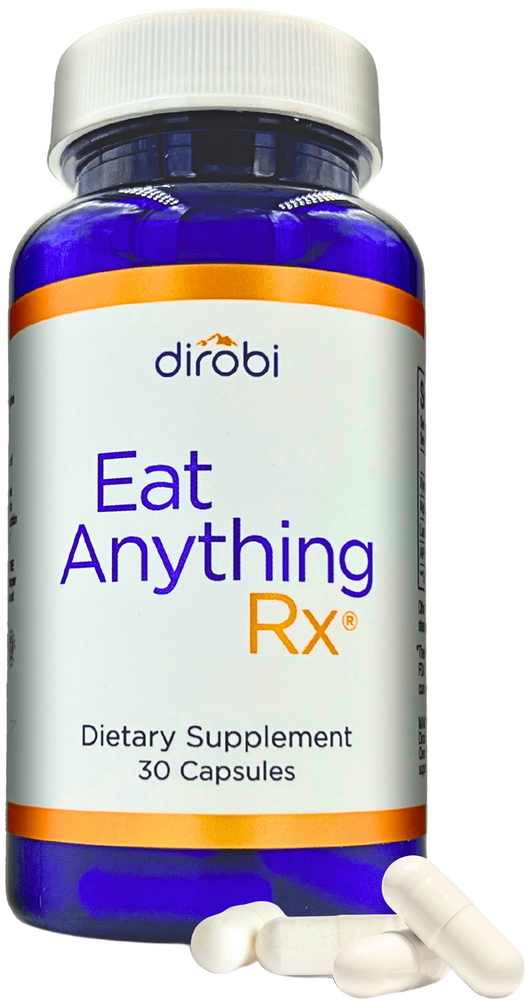
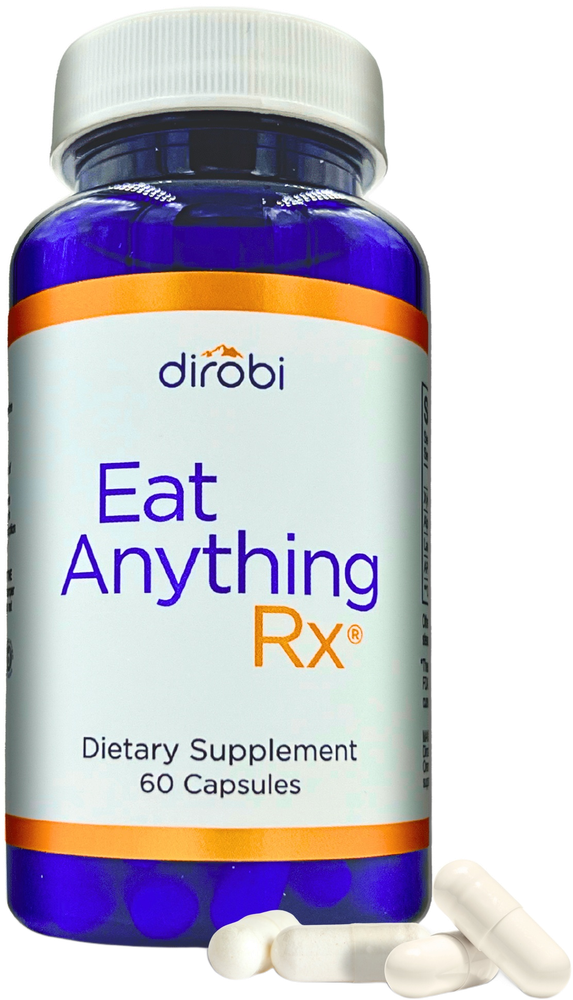
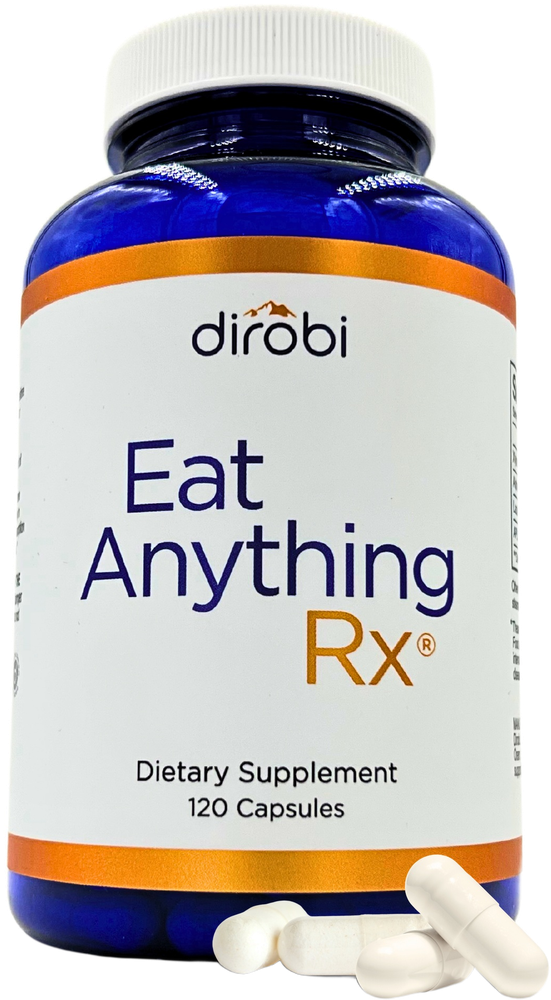
Eat Anything Rx is built around the idea this whole article describes: a mixed meal needs mixed coverage.
- APLC blend — amylase, protease, lipase and cellulase for the starch, protein, fat and plant fiber on the plate
- Xylose isomerase — for fructose
- Alpha-galactosidase — for the sugars in beans and cruciferous vegetables
- Lacto-Wise — a probiotic and prebiotic pairing
Take it with the meal, not after it.
Trial offer: a full bottle plus a free travel vial for $9.95 with free shipping, a $54.90 value. It continues at $33.96 per month after 30 days, and you can cancel any time. Prefer a one-time order? Buy a single bottle instead.
The Bottom Line on APLC
If you have been staring at a supplement label wondering what APLC enzyme blend means, there is no secret formula hiding behind the acronym.
It is four enzymes with four basic jobs:
- Amylase → starch
- Protease → protein
- Lipase → fat
- Cellulase → plant fiber
That is it.
And that is also what makes the combination useful.
Most meals are not made from one nutrient. They are messy combinations of starches, proteins, fats, vegetables, sauces, oils, and whatever else sounded good when you ordered.
So instead of targeting one specific food trigger, APLC provides broader digestive enzyme coverage for the meal as a whole. You will find it in Eat Anything Rx.
It is less “mysterious proprietary acronym” and more “four-person digestive work crew.”
Which admittedly does not sound quite as impressive on the bottle.
But at least now you know what they are doing in there.
Common Questions About the APLC Enzyme Blend
What does APLC stand for?
Amylase, Protease, Lipase, and Cellulase — the four enzymes combined in the blend. Each one works on a different part of a meal: starch, protein, fat, and plant fiber, respectively.
What does the APLC blend do for dairy-heavy meals?
Dairy is not only lactose. Cheese, cream and milk-based sauces carry a real protein and fat load, and that is exactly what the protease and lipase in APLC work on, which is part of why a rich, cheesy meal is where people tend to notice it. For the milk sugar itself you would want a lactase product, since APLC does not contain lactase.
How is APLC different from the other enzymes in Eat Anything Rx?
Xylose isomerase and alpha-galactosidase are each aimed at one specific carbohydrate — fructose and the sugars in beans, respectively. APLC is broader, covering the everyday starch, protein, fat, and plant fiber found in most meals rather than one trigger food. All three are in Eat Anything Rx.
Is APLC a proprietary or patented enzyme?
No. APLC is a named combination of four enzymes rather than a single novel compound, and multi-enzyme blends covering these same four categories are common across the digestive enzyme category. The acronym describes what is in the blend, not a trademark.
Why would anyone need cellulase from a supplement?
Because the human body does not produce any cellulase on its own. Breaking down the cellulose in plant cell walls is one job supplementation can do that unaided digestion genuinely cannot.
What foods does the APLC enzyme blend work on?
Starchy foods such as bread, pasta, rice, and potatoes; protein foods such as meat, eggs, and legumes; fatty foods such as oils, butter, cheese, and fried foods; and fibrous plant foods such as salads, leafy greens, and vegetable skins. In practice that is most of a mixed meal, which is the reason the four enzymes are packaged together in Eat Anything Rx.
Sources and further reading: Harvard Health on how digestive enzyme supplements work · a multi-enzyme clinical trial in functional dyspepsia (PMC) · background on pancreatic enzyme replacement therapy (NCBI Bookshelf)
Related reading: Digestive Enzymes vs. Probiotics · Lipase, the Fat-Digesting Enzyme · Alpha-Galactosidase Explained · What Is Protease? The Enzyme That Unzips Protein — the protein enzyme in the APLC blend, explained · What Is Cellulase? The Fiber Enzyme Humans Don’t Make — the fiber enzyme humans do not make · What Is Lacto-Wise Probiotic? The Synbiotic Explained
By Dave Sherwin, PN1 Certified Nutrition Coach
